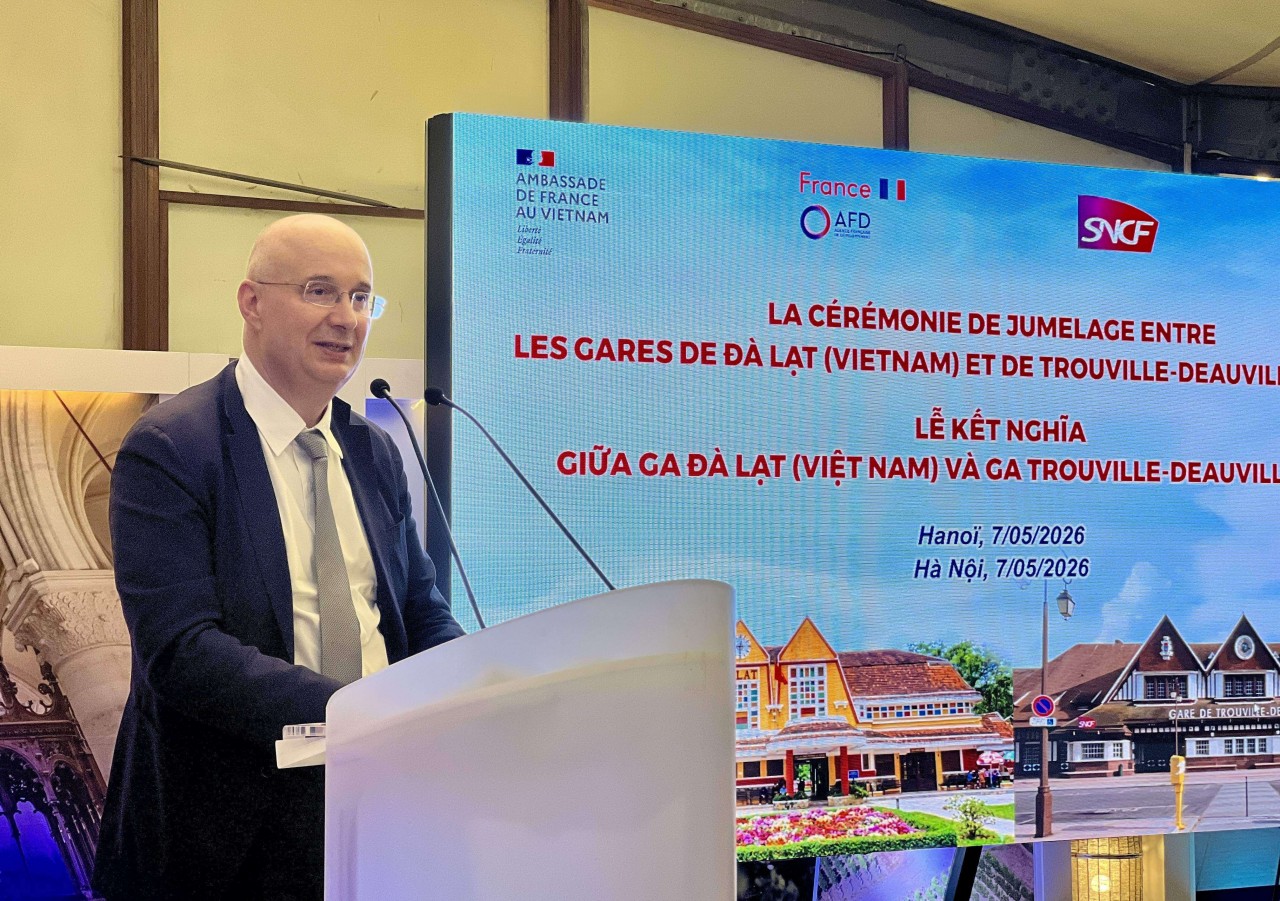
Speaking at the ceremony, Ambassador Olivier Brochet emphasized that this was a “rare and deeply symbolic event,” as the sisterhood agreement not only connected two architectural works but also reflected the historical, cultural, and friendly ties between the peoples of Viet Nam and France.
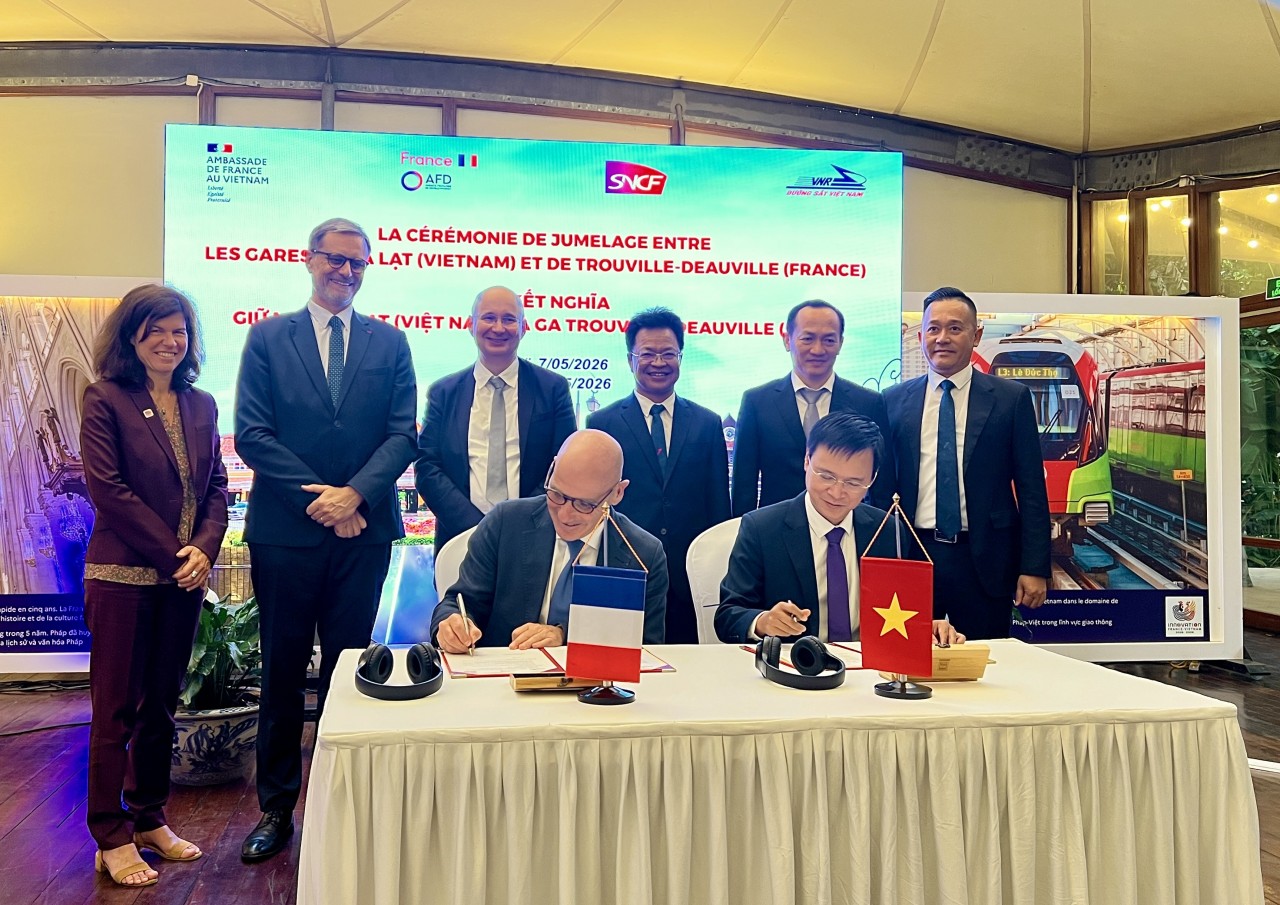 |
| The signing ceremony of the sisterhood agreement between Viet Nam’s Da Lat Station and France’s Trouville-Deauville Station. (Photo: Mai Anh) |
Da Lat Station and Trouville-Deauville Station were both built in the 1930s, sharing Art Deco architectural inspiration while blending with local identities. While Trouville-Deauville Station bears the strong imprint of the Normandy region, Da Lat Station evokes the image of the Central Highlands’ rong houses and the iconic LangBiang mountain range of the Lam Vien Plateau.
Ambassador Olivier Brochet said railway history is part of the shared heritage between Viet Nam and France. As the two countries upgraded their ties to a Comprehensive Strategic Partnership in 2024, cooperation in infrastructure, green transition, and transport connectivity has become a priority area, with railways representing one of the clearest expressions of bilateral cooperation ambitions.
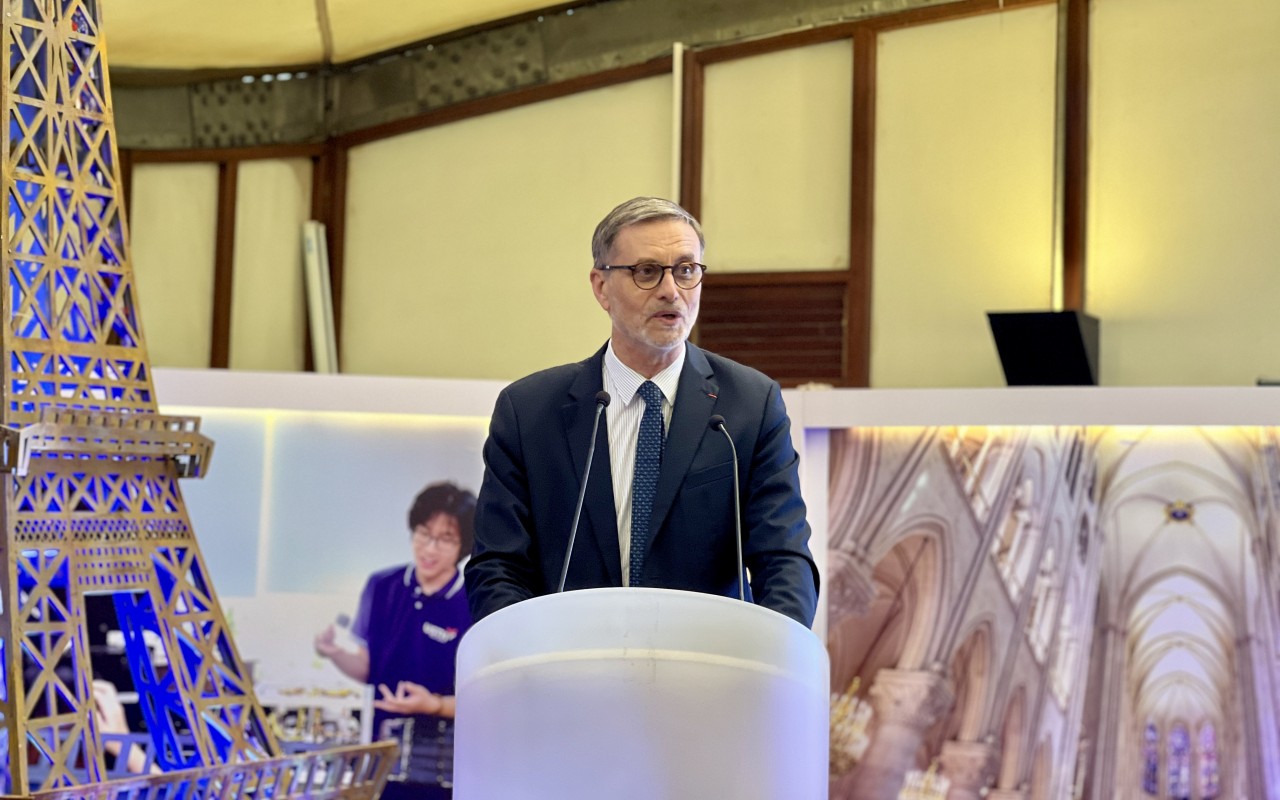 |
| French Ambassador to Viet Nam Olivier Brochet. (Photo: Mai Anh) |
Railway cooperation between the two countries has become increasingly substantive through numerous projects involving AFD and major enterprises such as SNCF, Systra, AREP, Alstom, and Artelia. Cooperation programs focus not only on infrastructure but also on human resource training, operational experience sharing, and passenger service development.
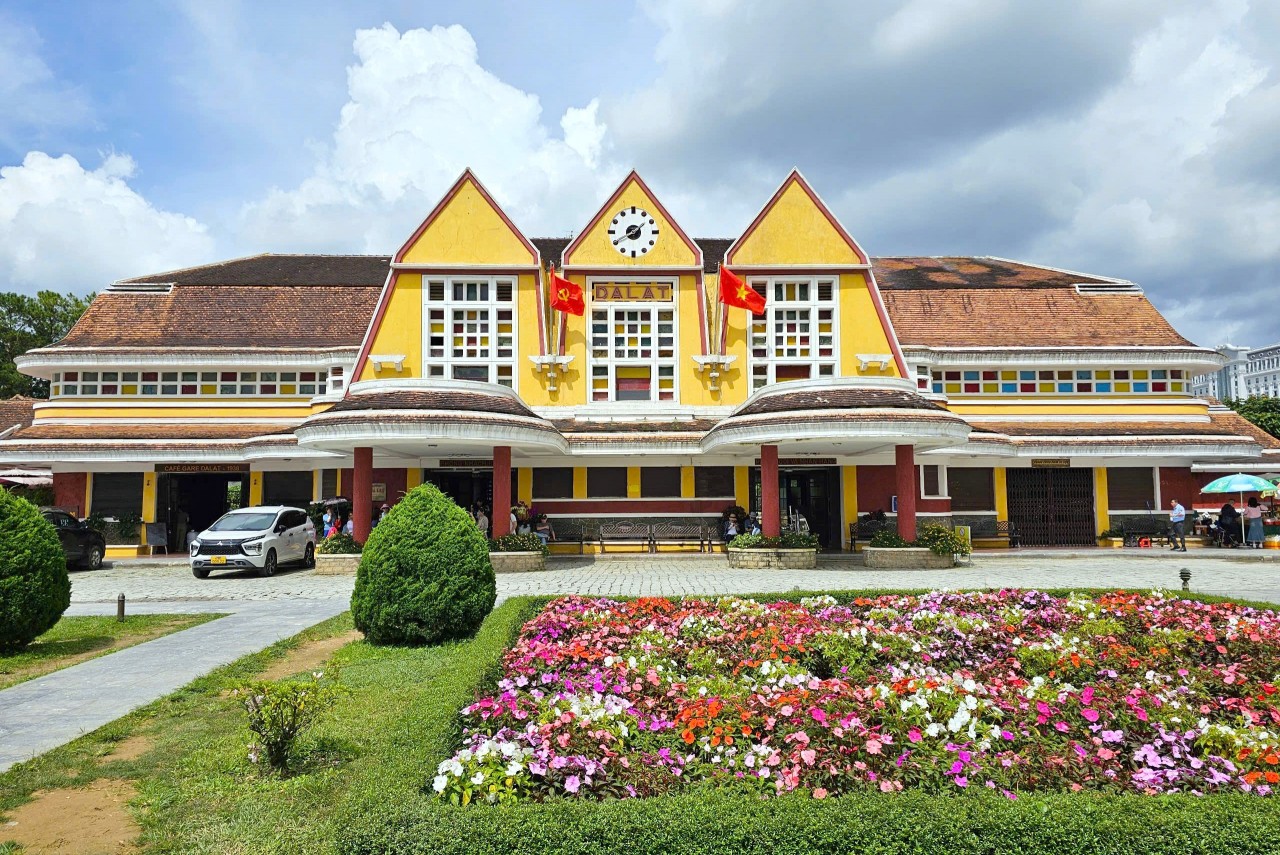 |
| Da Lat Station, Viet Nam. (Photo: KT) |
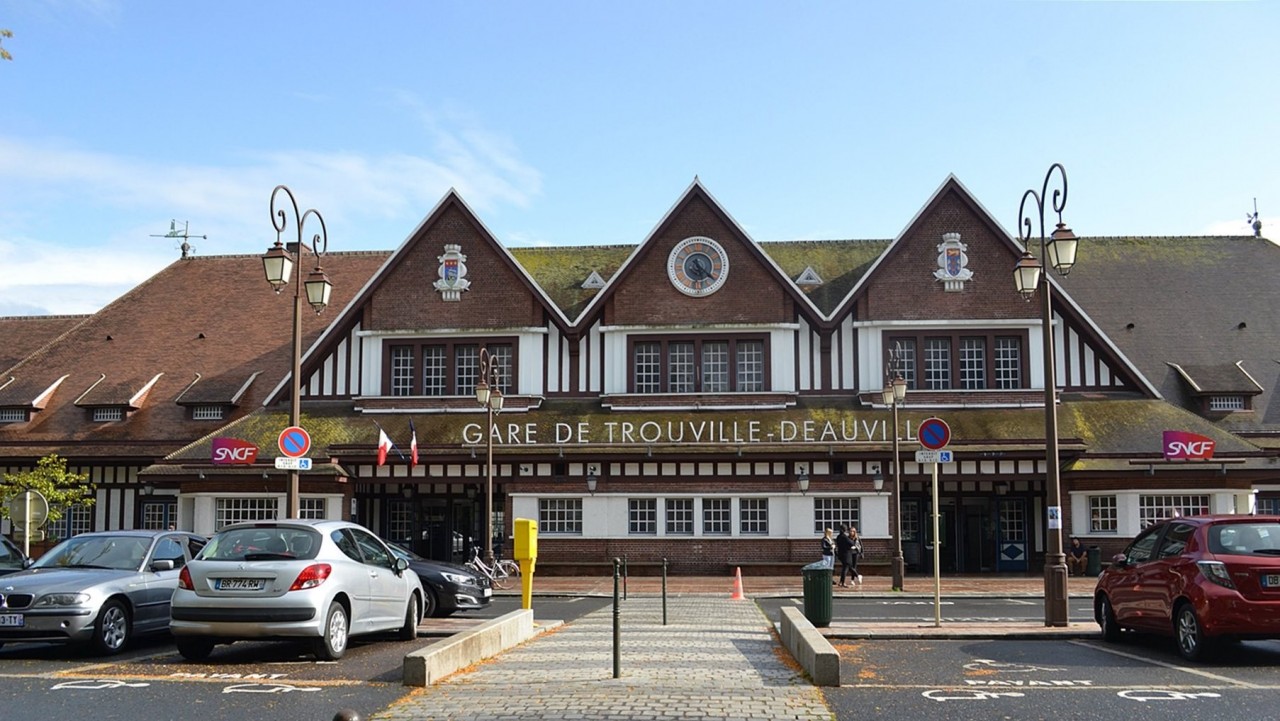 |
| Trouville-Deauville Station, France. (Photo: KT) |
Nguyen Chinh Nam, Deputy General Director of Viet Nam Railways, said Trouville-Deauville Station had inspired French architects Moncet and Reveron in designing Da Lat Station nearly a century ago. Therefore, the sisterhood agreement signed today is seen as a historically meaningful “reunion” after almost 100 years.
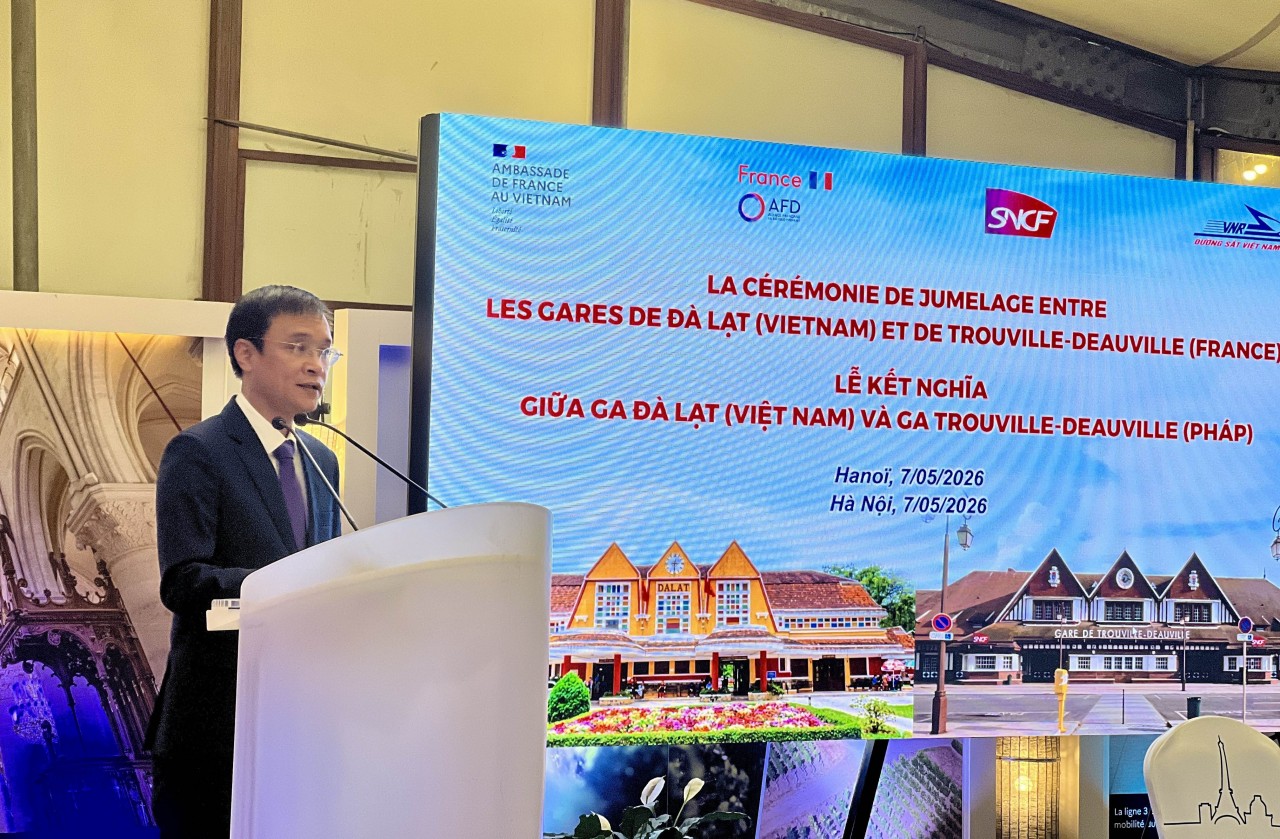 |
| Nguyen Chinh Nam, Deputy General Director of Viet Nam Railways. (Photo: Mai Anh) |
According to Nguyen Chinh Nam, Viet Nam’s railway sector has preserved Da Lat Station almost intact while gradually developing it into a “heritage station” associated with cultural tourism. The Da Lat - Trai Mat railway route has been restored for operation with many new tourism experiences, including the “Da Lat Night Journey” train, art performances, and cultural events organized directly at the station and aboard vintage train carriages.
Nguyen Chinh Nam stated that the sisterhood agreement between Da Lat Station and Trouville-Deauville Station symbolizes the spirit of “borderless connection” that SNCF has implemented in many countries around the world. It also demonstrates that modern railway cooperation extends beyond technology and infrastructure to include heritage preservation, sustainable tourism development, and cultural connectivity between communities.
 |
| Diego Diaz, President of SNCF International. (Photo: Mai Anh) |
Expressing optimism about future cooperation, he said the friendship between the two stations would open the door to broader collaborative projects between the railway sectors of Viet Nam and France, thereby further deepening the friendship between the two countries.
Diego Diaz, President of SNCF International, said that although Da Lat and Trouville-Deauville are located in different countries, they share many similarities in tourism development orientation, architectural beauty, and the ambition to make railways a driving force for socio-economic development.
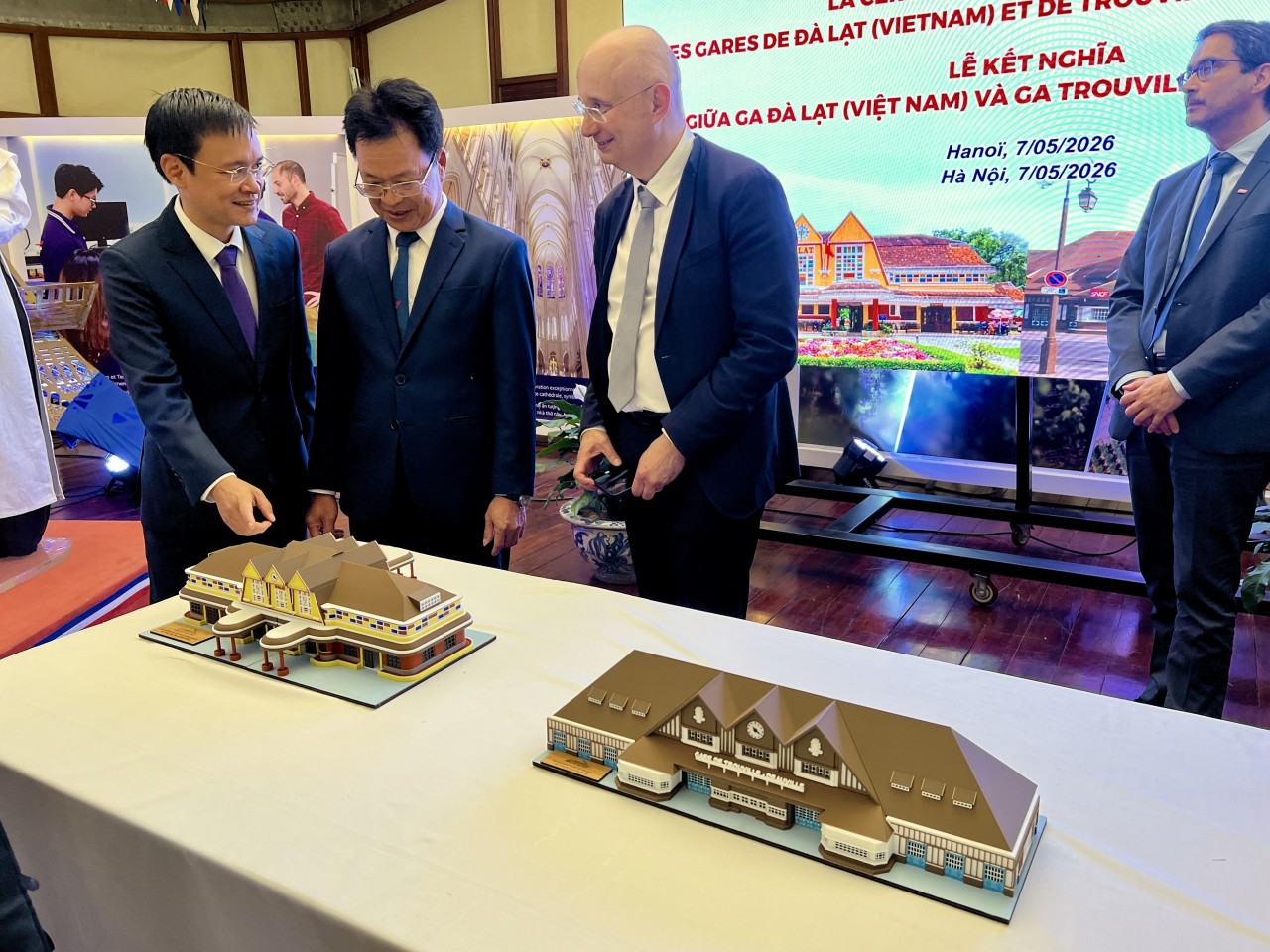 |
| A 3D model of Da Lat Station and Trouville-Deauville Station created by SNCF. (Photo: Mai Anh) |
He noted that SNCF had previously participated in high-speed railway projects in Taiwan, South Korea, and Morocco. Therefore, SNCF hopes to continue accompanying Viet Nam in the modernization of its railway sector by sharing international experience while also learning from local characteristics.
According to him, SNCF affiliates are currently working closely with Vietnamese partners to promote green growth, innovation, and improved connectivity in railway transport, aiming toward a more sustainable, connected, and inclusive development model in the future.
Source: Vietnamtimes
.jpg)