“A Vietnamese born in Cuba”
“I may well be a Vietnamese born in Cuba,” recalled Rogelio Polanco Fuentes, Ambassador of Cuba to Viet Nam, quoting Melba Hernández during a commemorative ceremony marking the 105th anniversary of her birth, held in Hanoi on July 24.
According to the Ambassador, those words encapsulated the profound affection the Cuban revolutionary heroine held for Viet Nam- an affection that transcended borders and was forged through years in which the two nations shared struggles and aspirations.
The memorial ceremony was held at the Embassy of Cuba in Viet Nam, where Melba Hernández served as Ambassador of Cuba to Viet Nam from 1977 to 1980.
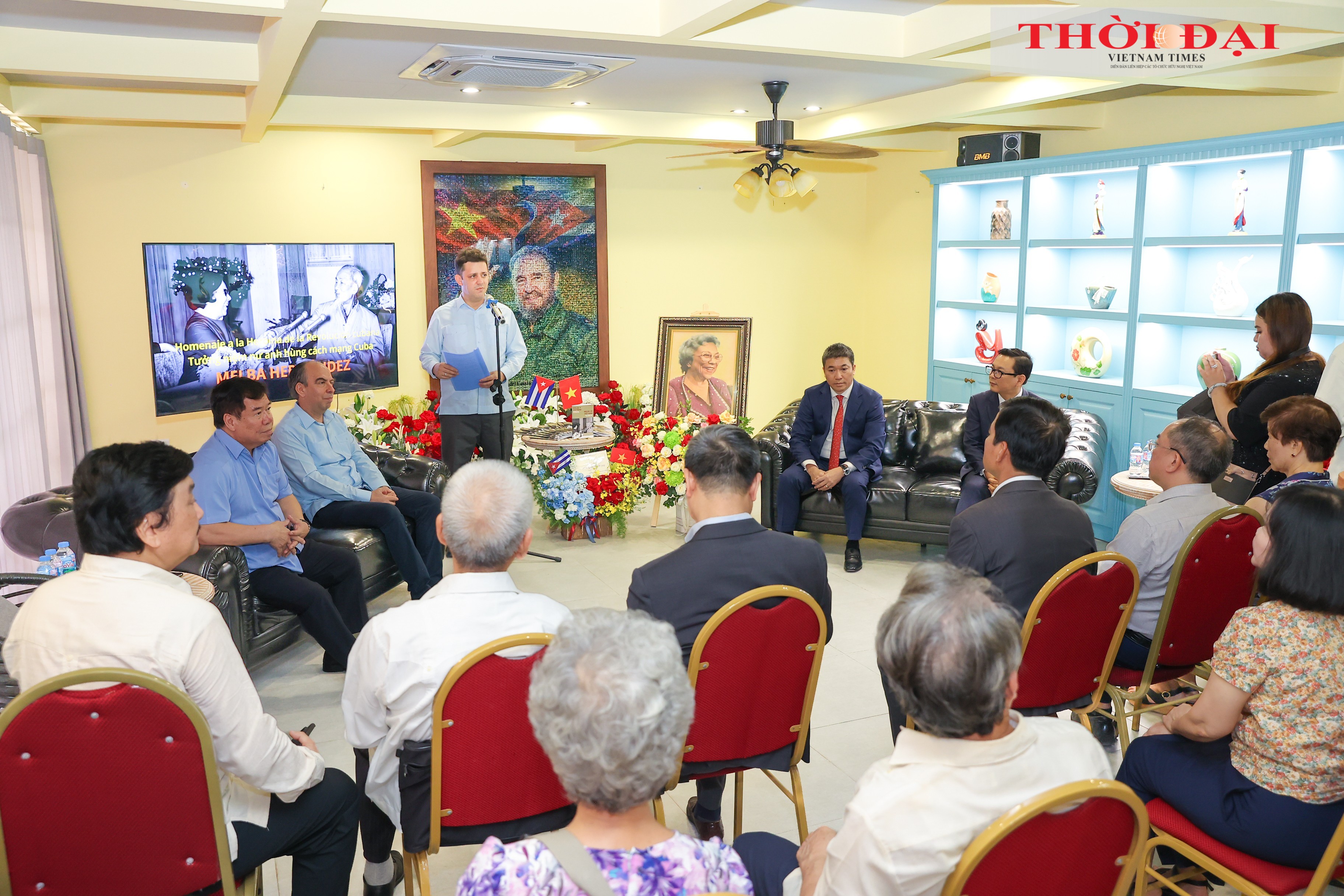 |
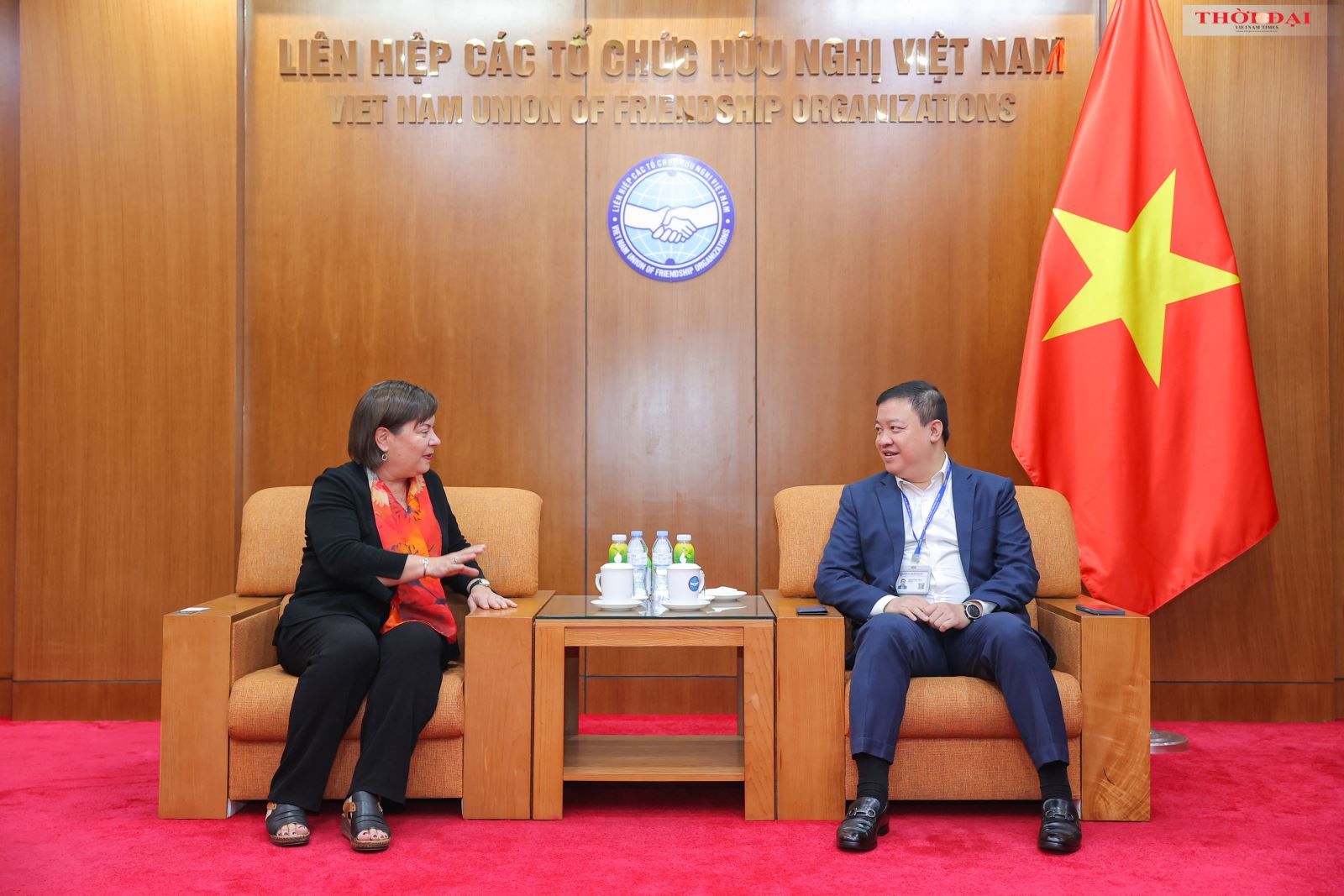
| Commemorative ceremony honoring Cuban revolutionary heroine Melba Hernández on the occasion of the 105th anniversary of her birth. (Photo: Dinh Hoa) |
For those who had known and worked alongside her, Ambassador Rogelio Polanco Fuentes said that commemorating Melba in what she regarded as her “second homeland” carried special significance.
“It is deeply moving to remember our comrade in her second homeland, Viet Nam; at the Embassy where she once served as Ambassador; and among Vietnamese friends who have always admired her wholehearted dedication to the liberation and development of this sister nation,” the Ambassador said.
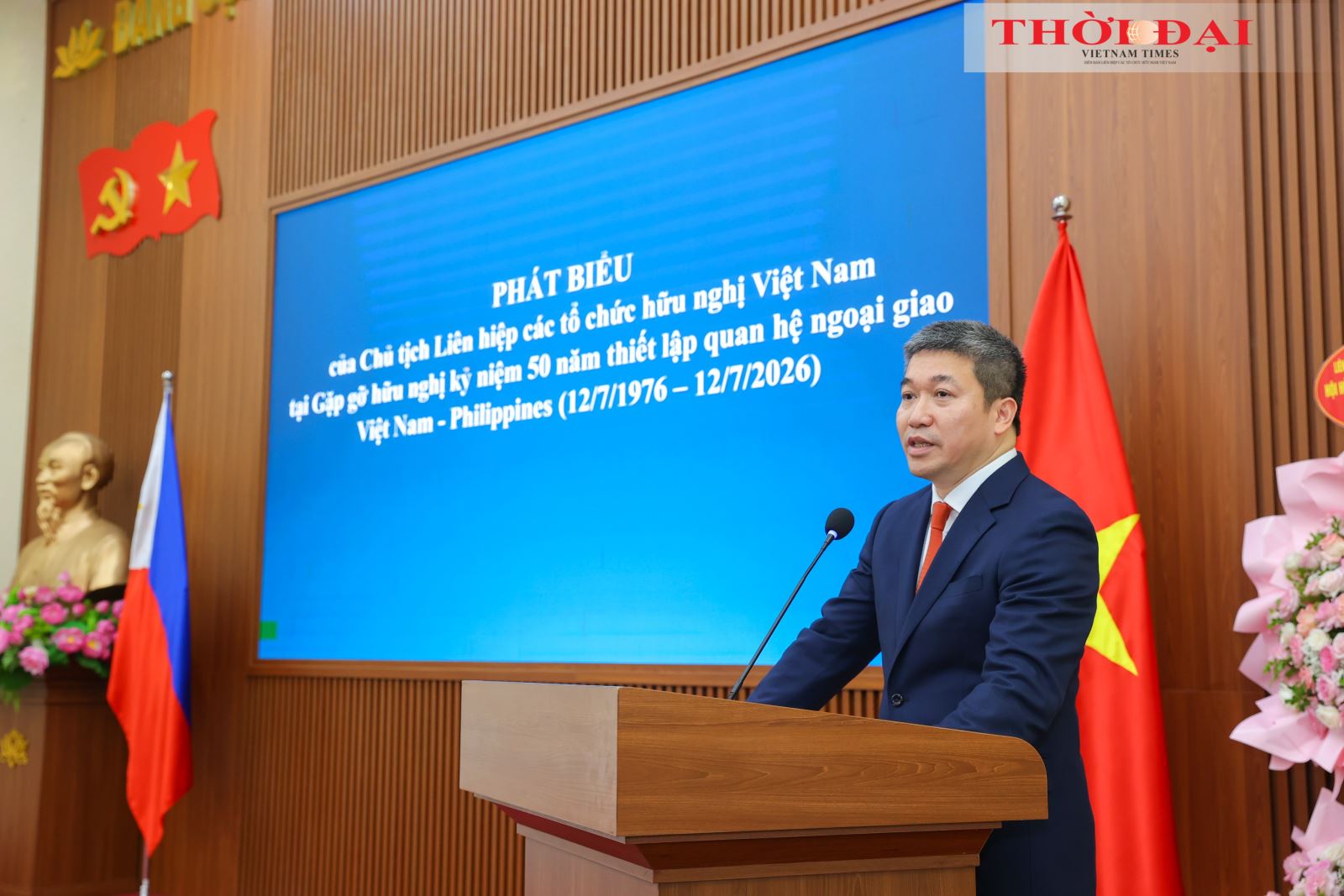
Phan Anh Son, President of the Viet NamUnion of Friendship Organizations (VUFO), described Melba Hernández as “a truly special friend of Viet Nam.” According to him, while President Ho Chi Minh and Commander-in-Chief Fidel Castro symbolize the special relationship between Viet Nam and Cuba, Melba Hernández served as a steadfast bridge connecting the peoples of the two countries. Fidel Castro’s decision to appoint a female revolutionary who had participated in the Moncada Barracks attack as the founding Chairwoman of the Cuban Committee for Solidarity with South Viet Nam also reflected the special importance and affection that the Cuban revolutionary leader attached to Viet Nam.
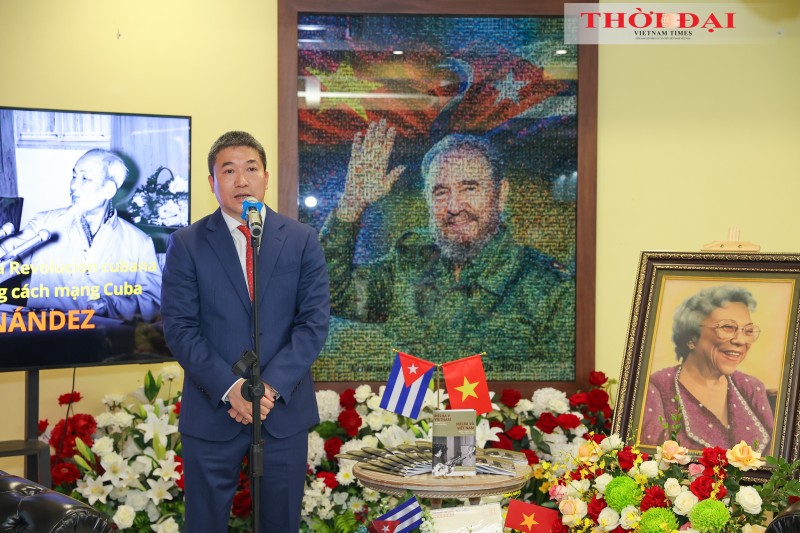 |
| Phan Anh Son, President of the Viet Nam Union of Friendship Organizations, delivers remarks at the commemorative ceremony. (Photo: Dinh Hoa) |
Behind that appointment lay an extraordinary revolutionary journey. Melba Hernández was born on July 28, 1921, in Cruces, then part of Las Villas Province, now Villa Clara Province, into a patriotic family. After earning a law degree from the University of Havana, she quickly joined the movement opposing the dictatorship of Fulgencio Batista.
On July 26, 1953, Melba Hernández and Haydée Santamaría became the only two women to participate in the assault on the Moncada Barracks led by Fidel Castro. Although the attack did not achieve military success, it marked the beginning of a new chapter in Cuba’s revolutionary struggle.
Melba was arrested and imprisoned at the Guanajay Women’s Prison. After her release in February 1954, she returned to underground revolutionary activities. Together with Haydée Santamaría and other comrades, she collected, organized, printed, and secretly distributed Fidel Castro’s courtroom defense delivered during the trial of those involved in the Moncada attack. The document later became widely known as History Will Absolve Me.
She subsequently joined the first leadership of the July 26 Movement and helped prepare for the voyage of the Granma, which carried Fidel Castro and fellow revolutionaries from Mexico back to Cuba. She later joined one of the rebel columns in the Sierra Maestra mountains in eastern Cuba, remaining there until the triumph of the Cuban Revolution on January 1, 1959.
Recalling this journey, Ambassador Rogelio Polanco Fuentes said Cuba remains deeply proud of Melba Hernández and Haydée Santamaría - the two women who took part in the Moncada assault, a defining milestone in Cuban revolutionary history.
Following the victory of the Cuban Revolution in 1959, Melba was entrusted with numerous responsibilities in foreign affairs and international solidarity work. Among her tireless contributions, Ambassador Rogelio Polanco Fuentes particularly highlighted her role as the founding Chairwoman of the Cuban Committee for Solidarity with South Viet Nam, which later became the Committee for Solidarity with Viet Nam, Laos and Cambodia - the predecessor of today’s Cuba-Viet Nam Friendship Association.
“Among Comrade Melba’s tireless revolutionary achievements, her role as the founding Chairwoman of the Cuban Committee for Solidarity with South Viet Nam will forever hold a place of the highest honor,” the Ambassador said.
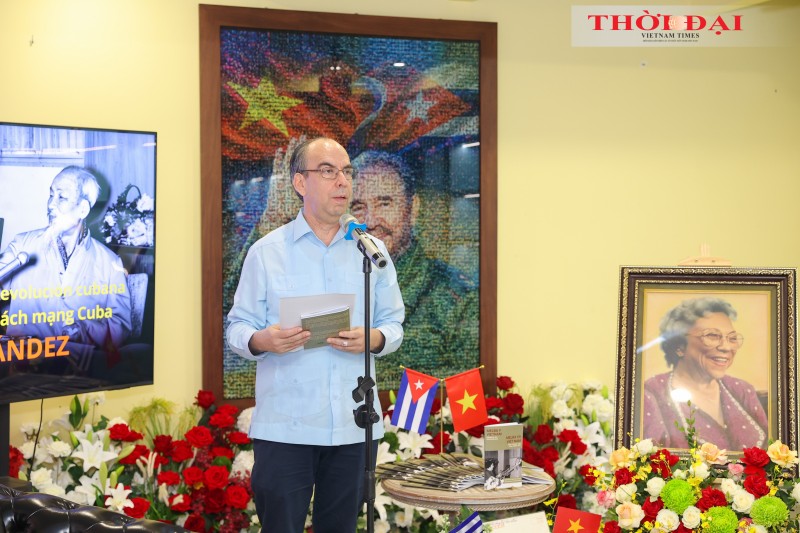 |
| Ambassador of Cuba to Viet Nam Rogelio Polanco Fuentes speaks at the commemorative ceremony. (Photo: Dinh Hoa) |
The responsibility entrusted to Melba by Fidel Castro went far beyond leading a friendship organization. During the years of intense war in Viet Nam, she and the Committee mobilized Cuba’s political organizations, mass organizations, state institutions, and people from all walks of life in support of the Vietnamese people's struggle.
Through this mission, Melba became one of the key figures in laying the foundation for and nurturing solidarity between the peoples of Viet Nam and Cuba. Many generations of Vietnamese officials and students who studied in Cuba affectionately called her “Mami Melba.”
A “Nationwide front” in solidarity with Viet Nam
Nguyen Xuan Phong, former Director-General of the Department of the Americas under Viet Nam’s Ministry of Foreign Affairs, recalled that he first met Melba Hernández in 1965 while serving at the Representative Office of the National Front for the Liberation of South Viet Nam in Havana.
During his years in Cuba, he met her almost every week - sometimes at the headquarters of the Cuban Committee for Solidarity with South Viet Nam, sometimes at conferences, and occasionally at her home.
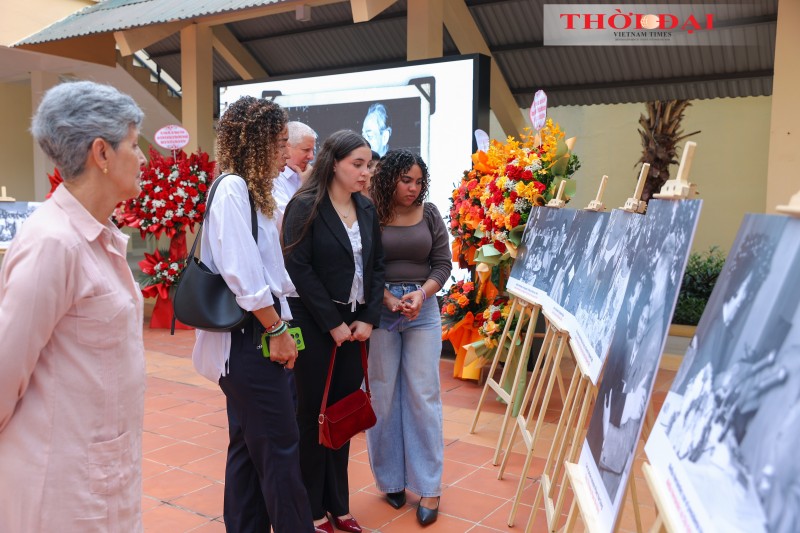 |
| Photo exhibition featuring Cuban revolutionary heroine Melba Hernández and Viet Nam. (Photo: Dinh Hoa) |
These frequent encounters enabled Nguyen Xuan Phong to appreciate Melba’s role not only in friendship activities but also in organizing a broad-based social movement in support of Viet Nam. Under her leadership, organizational skills, and inspirational guidance, the Cuban Committee for Solidarity with South Viet Nam brought together representatives of political organizations, mass organizations, and numerous Cuban ministries and agencies, including those responsible for defense, internal affairs, health, and education. Nguyen Xuan Phong described it as “a nationwide front in solidarity with Viet Nam.”
The Committee carried out two closely connected missions. First, it organized activities supporting the Vietnamese people’s struggle, helping Cuba become one of the leading banners of the international solidarity movement with Viet Nam.
Second, it served as a channel through which the Cuban people learned about Viet Nam, its people, and their struggle, thereby fostering patriotism, heroism, and confidence in the strength of a nation united by self-reliance and supported by friends around the world.
Melba’s influence extended well beyond Cuba. She also helped bring the voice of support for Viet Nam to international forums and solidarity organizations.
Vu Chi Cong, former Ambassador of Viet Nam to Cuba, said Melba’s work went beyond the framework of bilateral relations, particularly during her service with the Organization of Solidarity of the Peoples of Asia, Africa and Latin America (OSPAAAL).
Drawing on her legal training, Melba employed political and legal arguments to speak out about the war in Viet Nam, bringing the Vietnamese people's sacrifices, losses, and aspirations for peace to international public opinion. According to Vu Chi Cong, her contributions at international forums, including the Bertrand Russell Tribunal, helped expand global sympathy and support for the just cause of the Vietnamese people throughout the 1960s.
Vu Chi Cong likened Melba to “a magnet,” attracting the finest sentiments and values of Cuban society toward Viet Nam. Her prestige as a revolutionary heroine, organizational talent, and genuine affection enabled her to transform the spirit of solidarity from international forums into a living force within Cuban society. Viet Nam was no longer seen as a distant country on the other side of the globe but became part of the consciousness and emotional bond of generations of Cubans. Melba’s legacy therefore extends beyond any single organization or campaign. It remains a lasting social foundation for Viet Nam-Cuba friendship, continually passed down and strengthened by successive generations.
Viet Nam Union of Friendship Organizations Donates VND 1.2 Billion to Support the Cuban People
During the commemorative ceremony, Phan Anh Son, President of the Viet Nam Union of Friendship Organizations (VUFO), symbolically presented VND 1.2 billion (approximately USD 46,000) to Cuban Ambassador Rogelio Polanco Fuentes in support of the Cuban people.
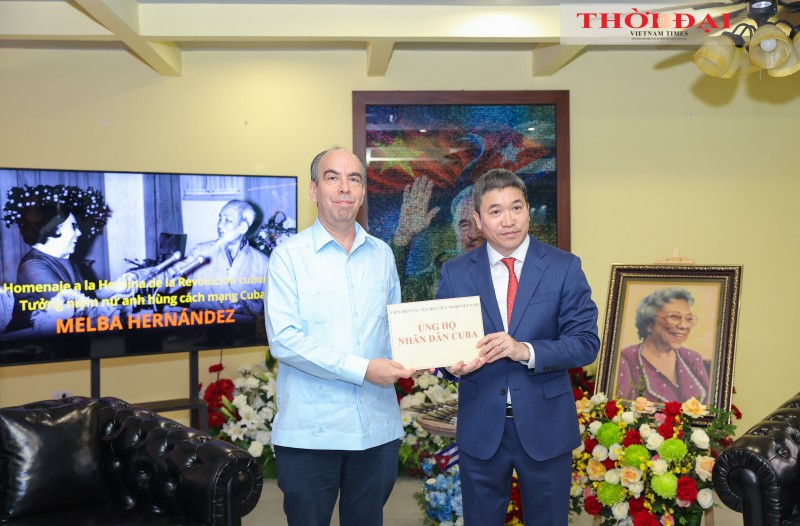 |
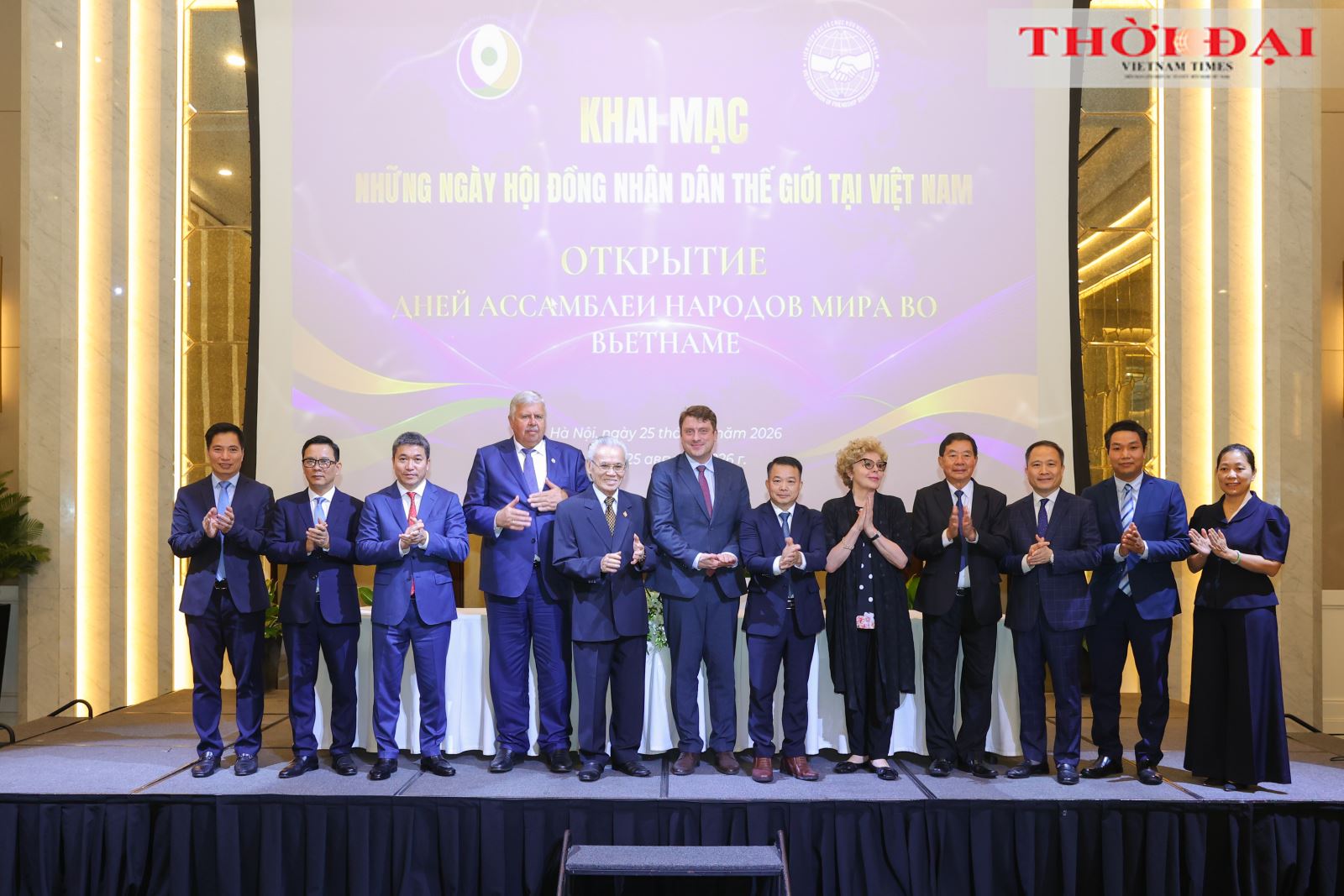
| Phan Anh Son, President of the Viet Nam Union of Friendship Organizations, symbolically presents VND 1.2 billion to Cuban Ambassador to Viet Nam Rogelio Polanco Fuentes in support of the Cuban people. (Photo: Dinh Hoa) |
The donation was raised during June 2026 by the Viet Nam Union of Friendship Organizations, the Viet Nam-Cuba Friendship Association, the Viet Nam Alumni Club in Cuba, and member organizations throughout the VUFO system to mark the 105th anniversary of Melba Hernández’s birth.
“We regard this as a small gift and a modest contribution that reflects a great heart and the special affection of the Vietnamese people for our Cuban brothers and sisters,” Phan Anh Son said.
The VUFO President thanked all organizations and individuals for their support and contributions, adding that VUFO would continue mobilizing resources and carrying out activities to assist the Cuban people in the coming period.
The donation will be transferred by the Embassy of Cuba in Viet Nam to the Cuba-Viet Nam Friendship Association and the Cuban Institute of Friendship with the Peoples (ICAP) to support the Cuban people.
Ambassador Rogelio Polanco Fuentes expressed his gratitude for the solidarity and support extended by the Communist Party of Viet Nam, the Vietnamese State, organizations, and people. According to the Ambassador, the contribution represents both practical assistance and a meaningful source of encouragement for the Cuban people as they continue to face many challenges.
| Launch of a bilingual publication on Melba Hernández At the ceremony, the Embassy of Cuba in Viet Nam introduced the Spanish-Vietnamese bilingual publication “Melba and Viet Nam: A symbol of solidarity”. The publication is a chapter from the book “Melba, the Woman of all times” by Margarita Isástegui Avilés and Gladys Rosa Álvarez Porro, published by Verde Olivo Publishing House. According to Ambassador Rogelio Polanco Fuentes, the book serves as a cultural bridge, bringing readers closer to the life of an exemplary revolutionary and the legacy of international solidarity she left behind. The book features a foreword by Army General Raúl Castro Ruz. On the occasion, representatives of the Viet Nam News Agency Friendship Association presented the Embassy of Cuba in Viet Nam with a collection of photographs of Melba Hernández. Melba Hernández’s nephew, Manuel Enrique Montañé Enriquez, also presented a copy of a letter from Fidel Castro to Melba on the occasion of her appointment as Ambassador of Cuba to Viet Nam. |
Source: Vietnamtimes